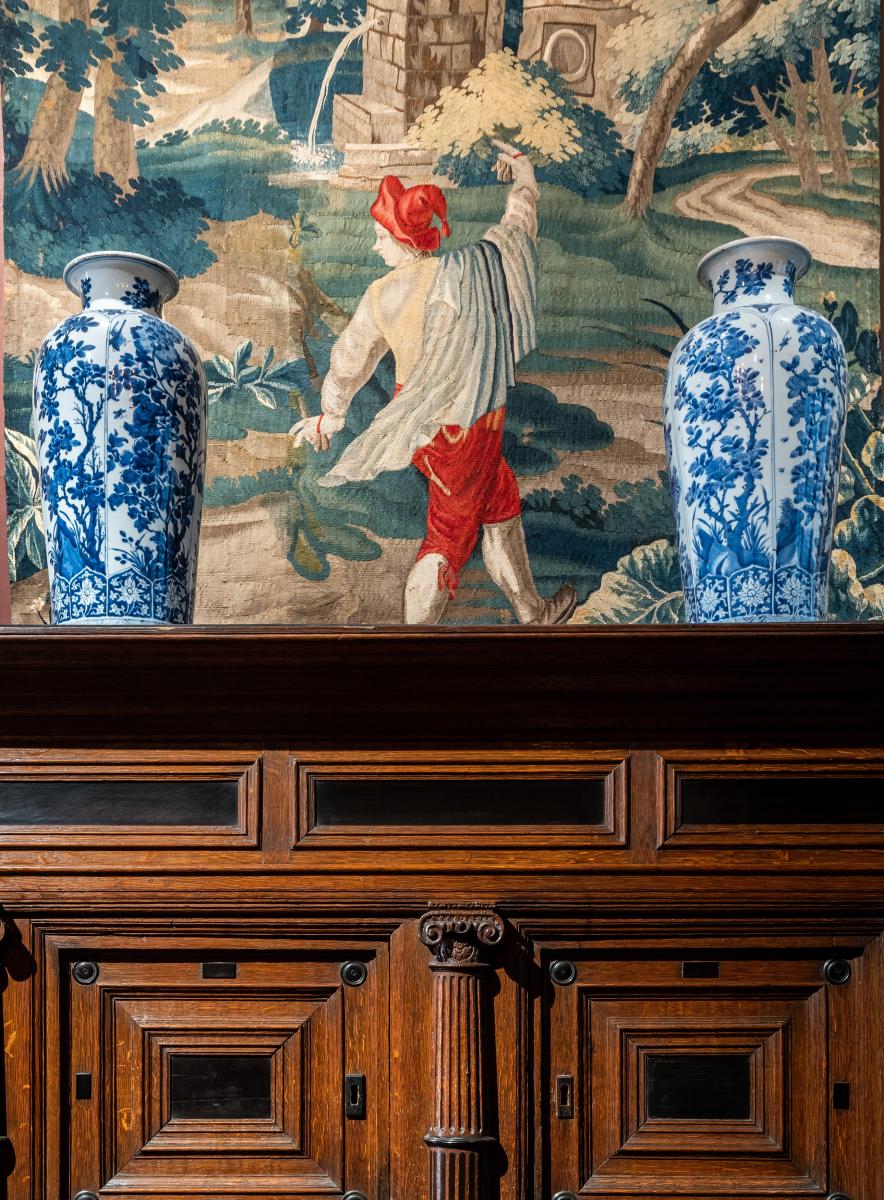
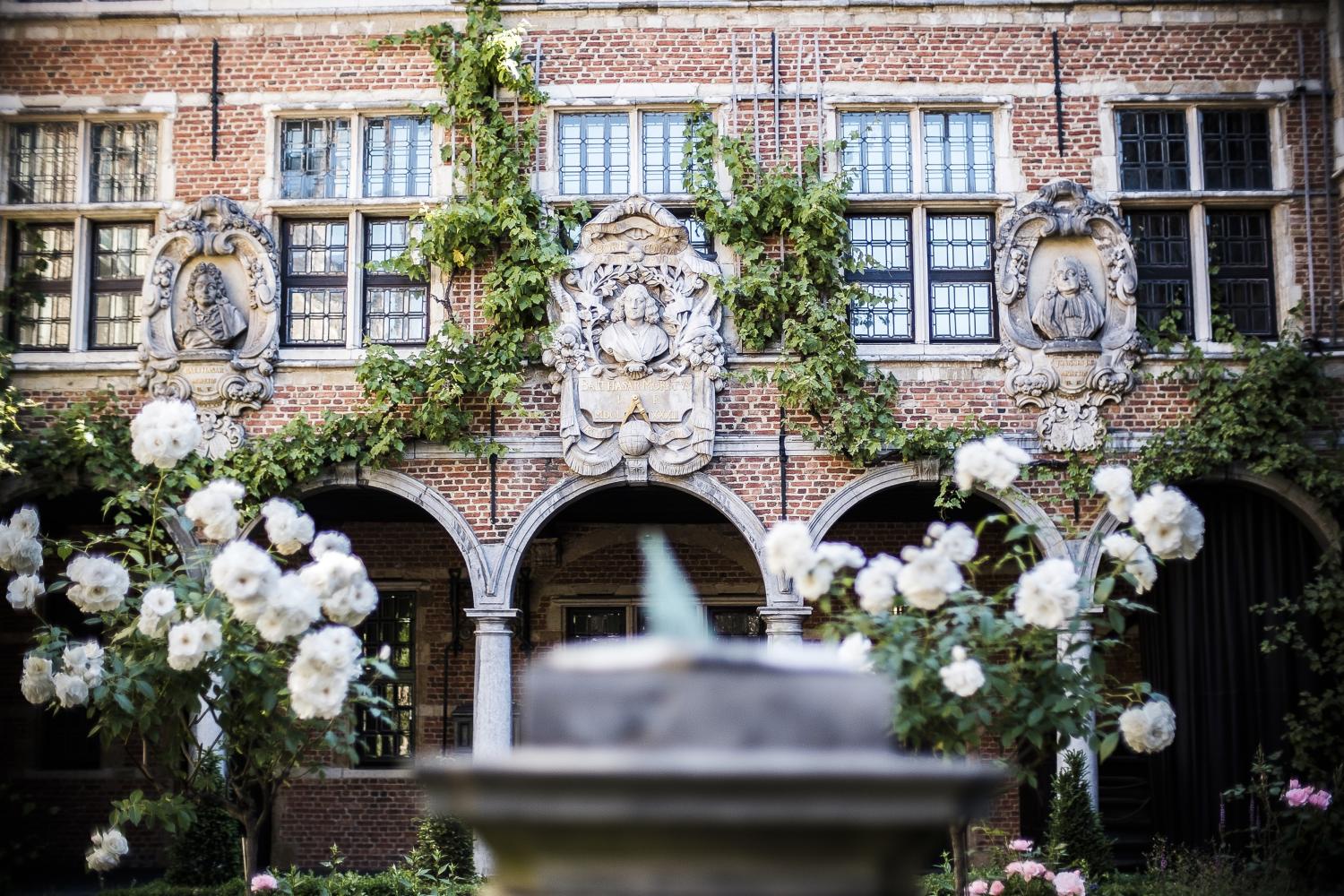
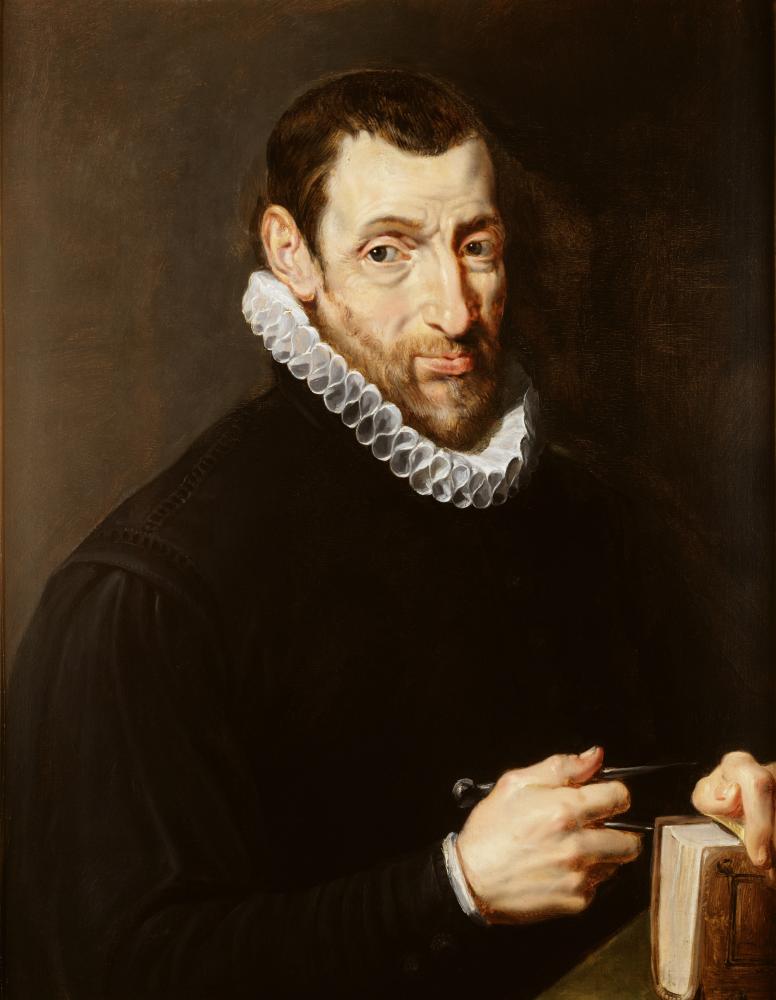
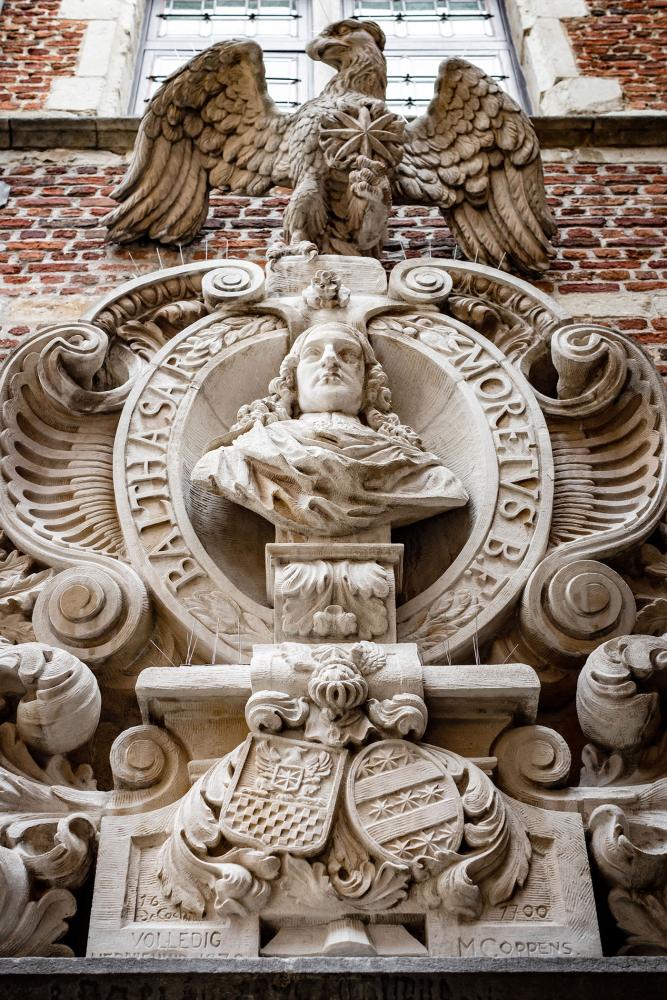
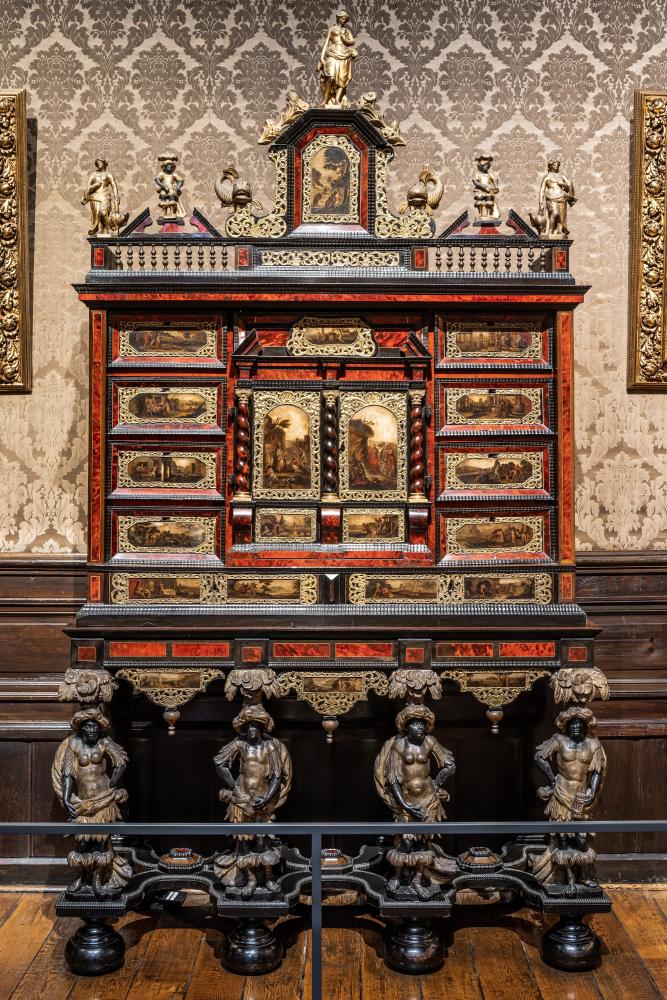
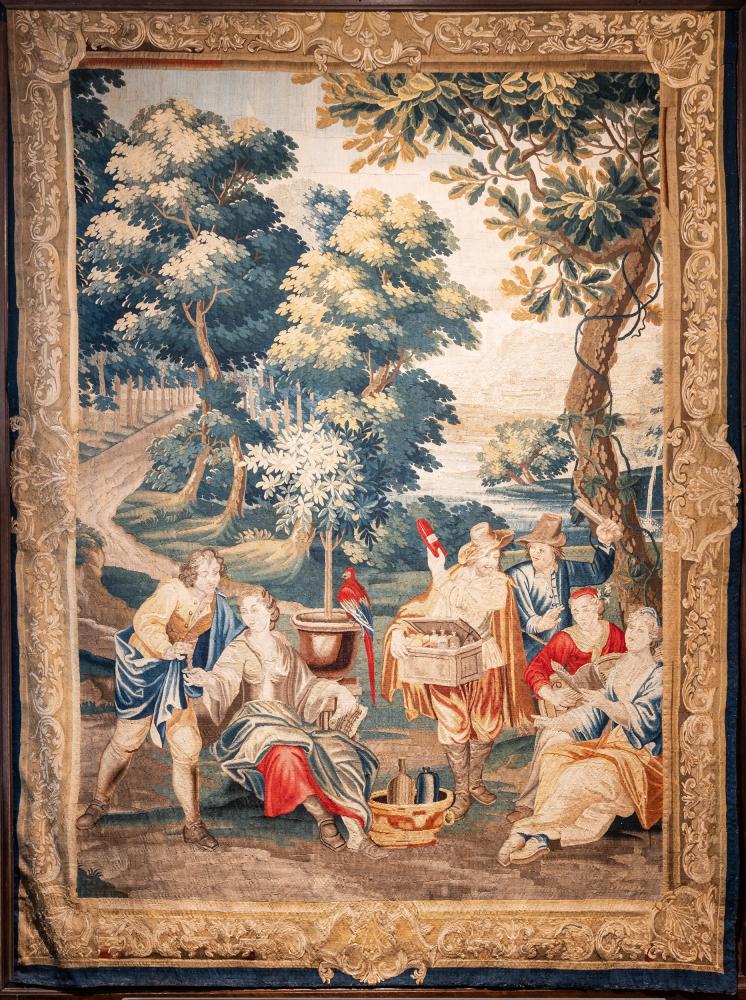
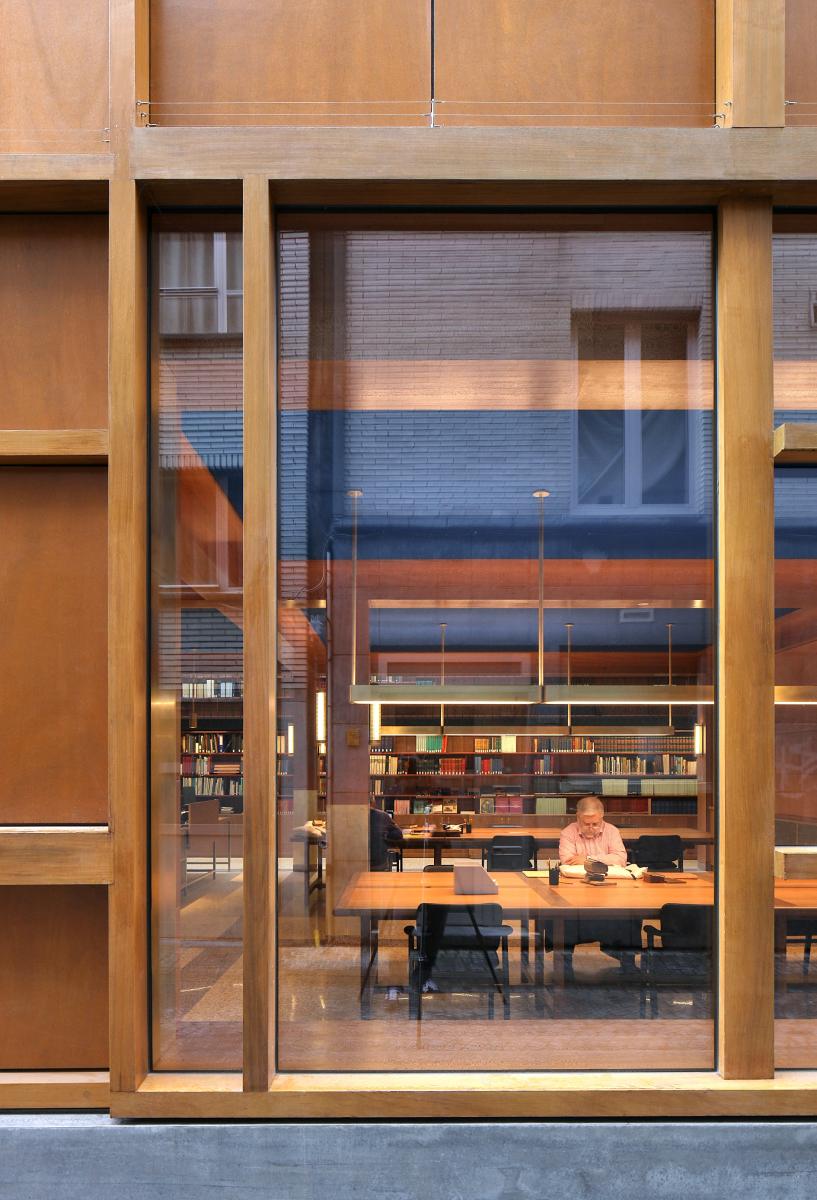
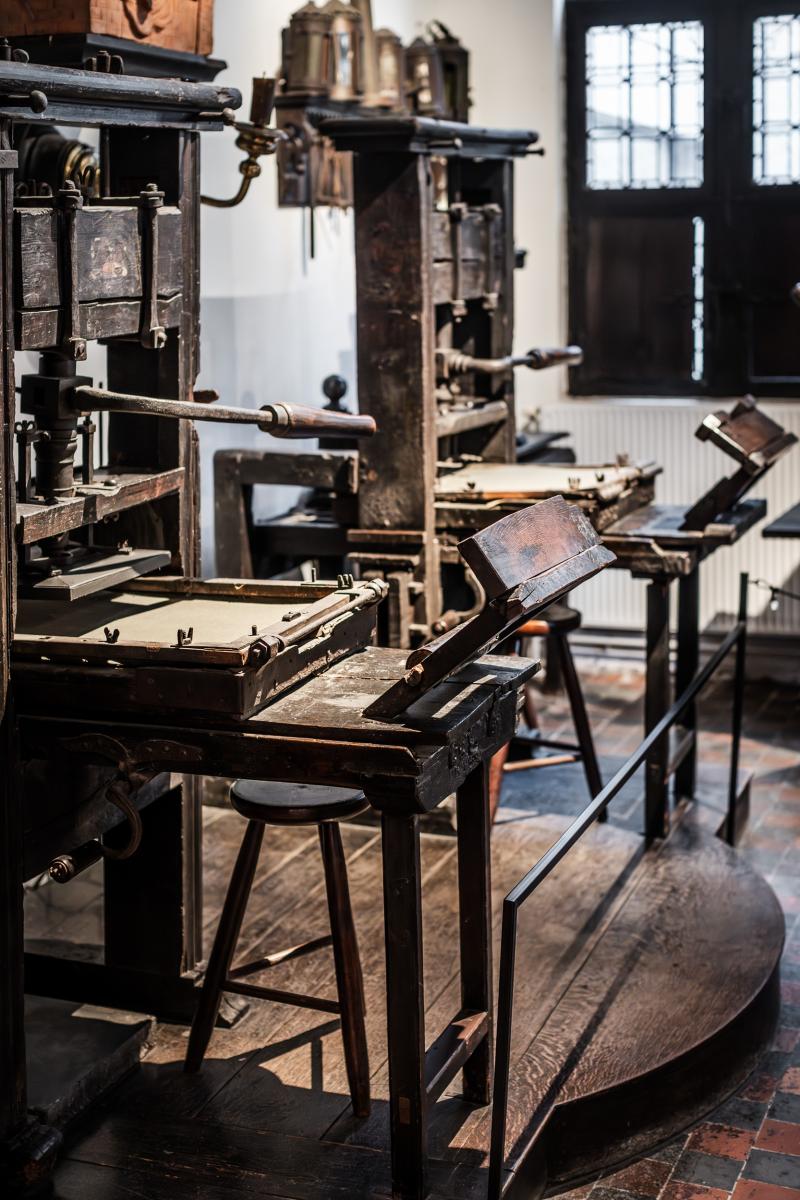
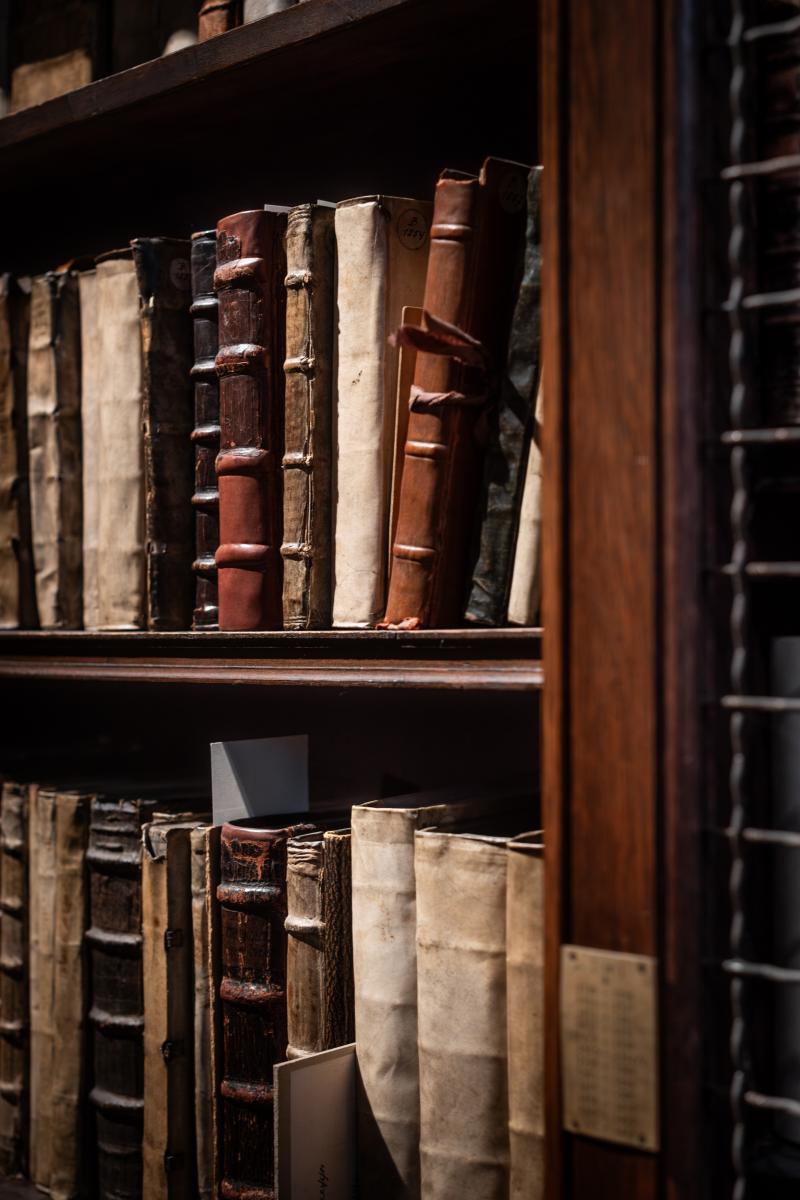
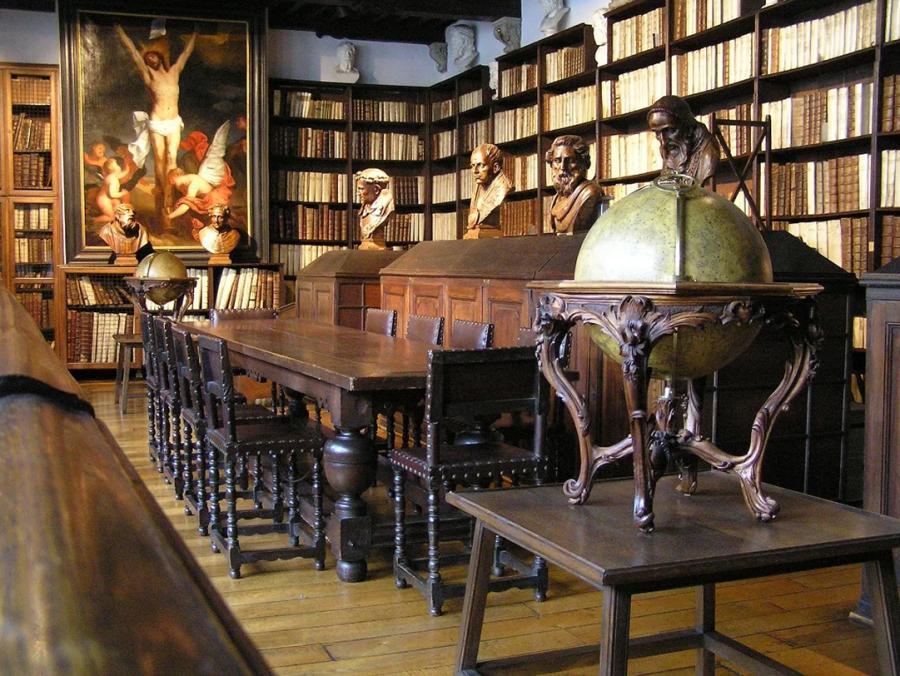
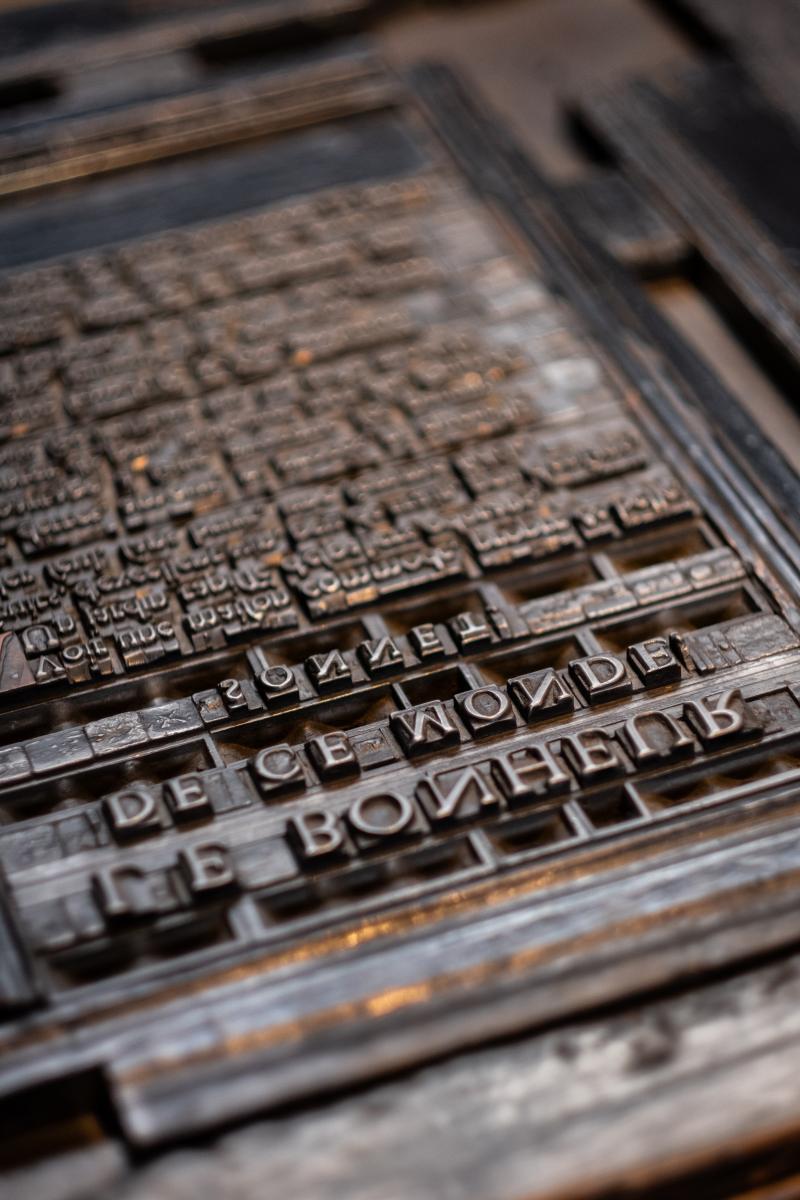
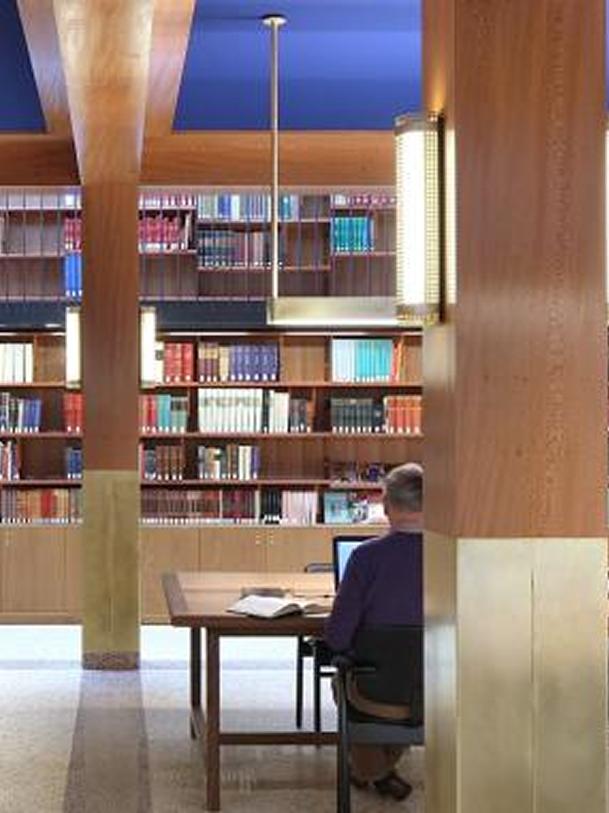
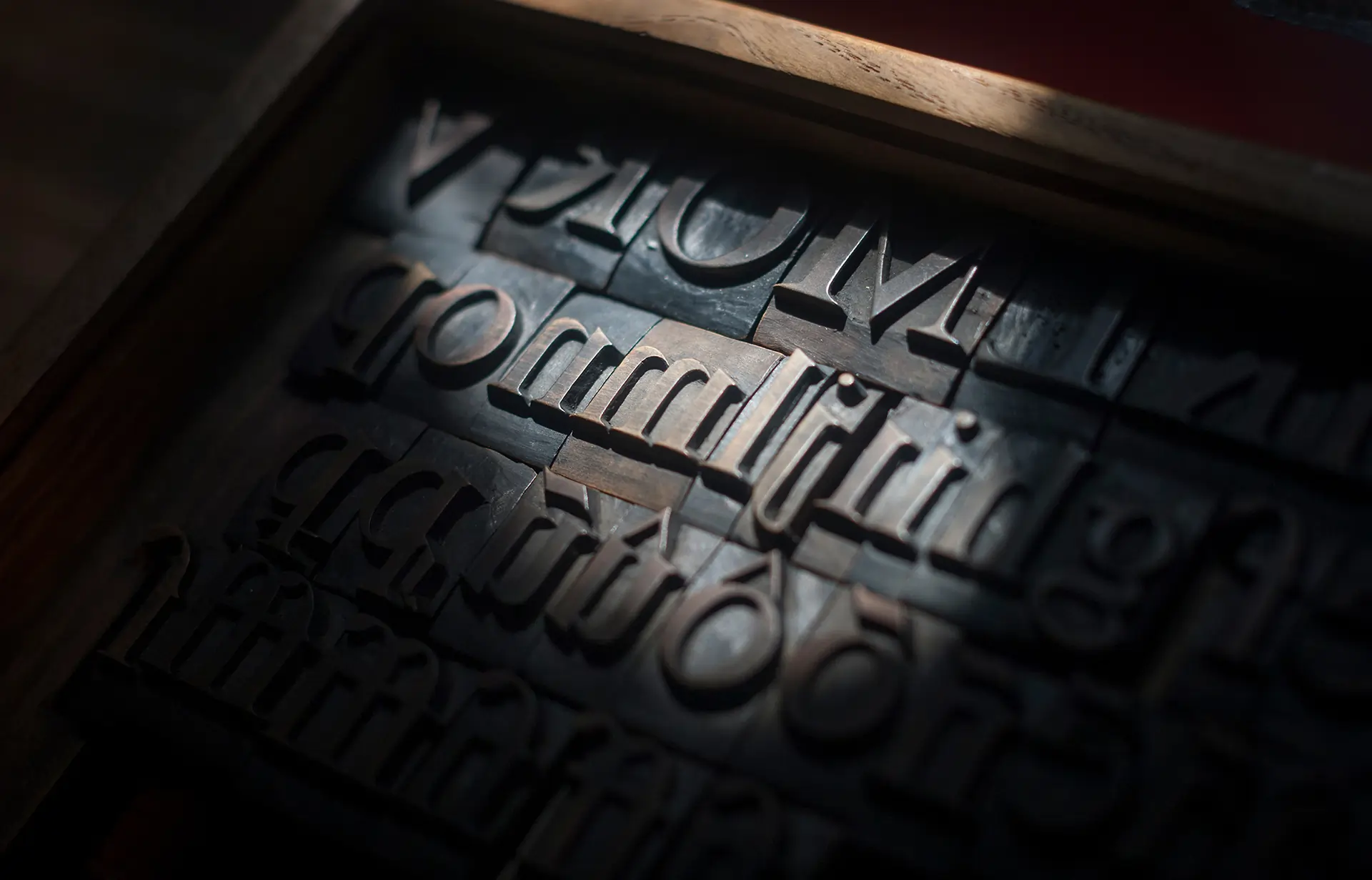
A “large house with gate, gallery, yard, tower, parlour, kitchen…” as quoted in historical documents. In 1576, Christophe Plantin signed the deed of sale for a property on the Vrijdagmarkt and renamed it as De Gulden Passer (the Golden Compass). It was an ideal estate with a spacious garden, a coach house facing the Heilige Geeststraat, and an impressive printing office with room for sixteen printing presses. The complex expanded throughout the 17th century, with Jan I and especially Balthasar I Moretus adding extra residences, workspaces, and a state-of-the-art library. The shop was also housed in De Gulden Passer around 1700.
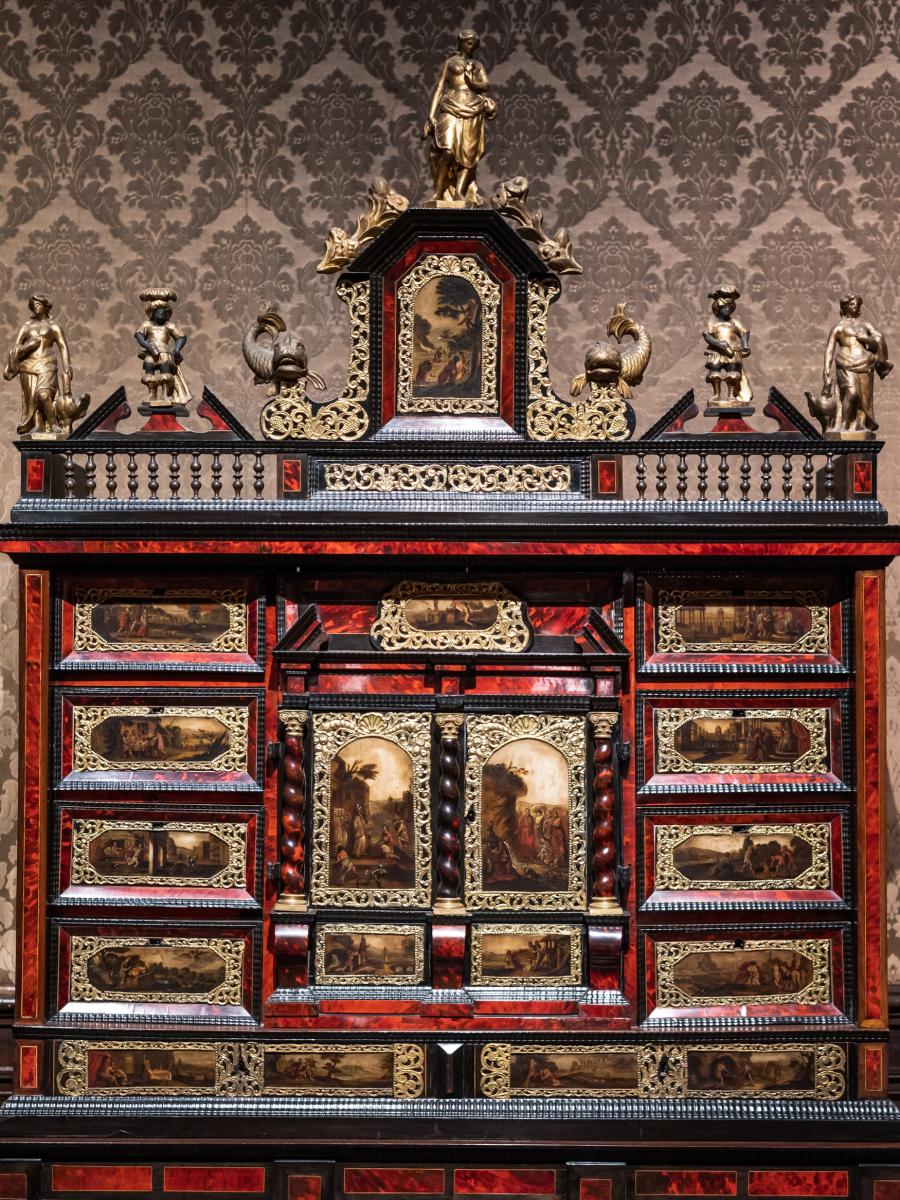
In the 18th century, Franciscus Joannes Moretus gave the site its current classical façade. The buildings facing the courtyard were connected, becoming a unified architectural complex, and De Gulden Passer grew into a unique city palace, where life, business, and art seamlessly overlapped. This historical treasure has been open to the public since the Plantin-Moretus Museum opened in 1877.